
Organics

Period
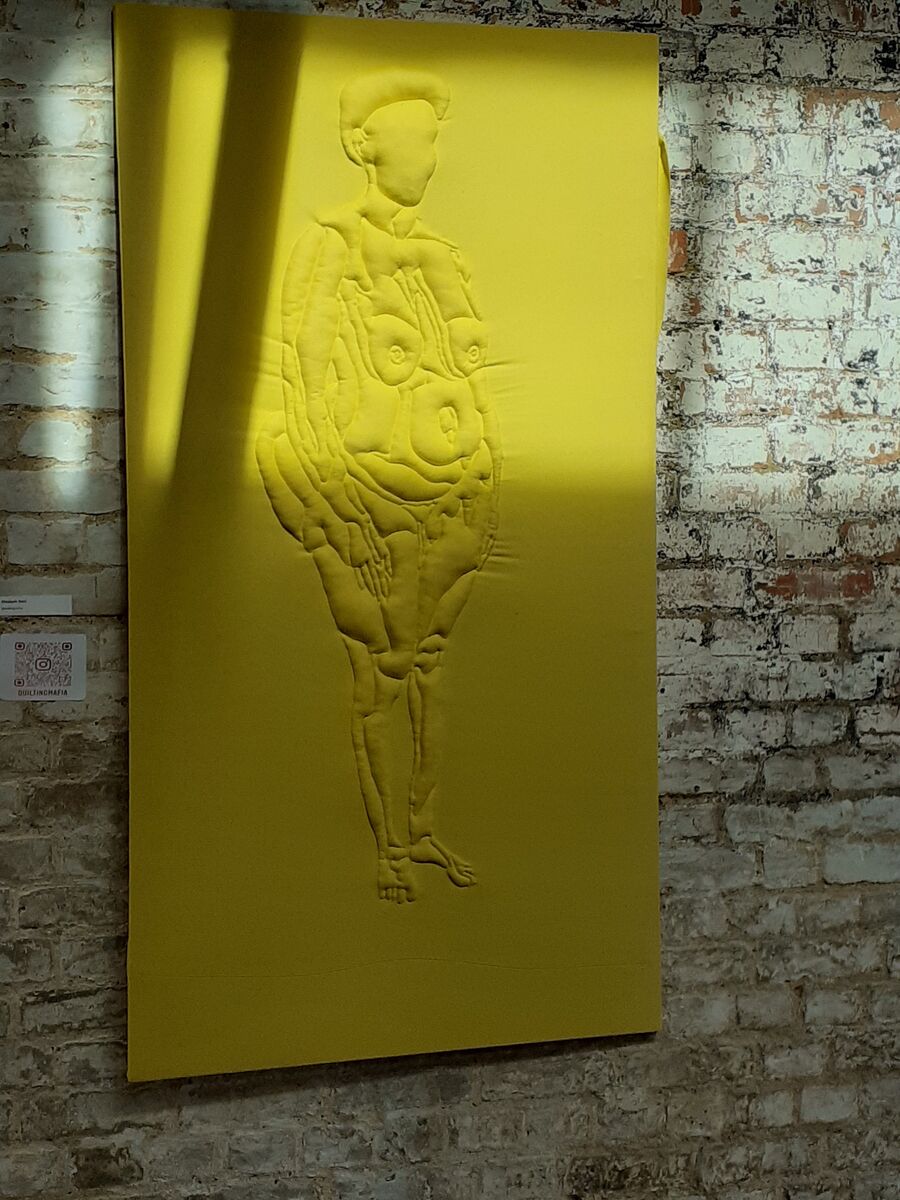
This work functions as an open conversation on the historical and ongoing perceptions of Black women’s bodies. The oversexualisation of Black women has been extensively documented, alongside the adultification of young Black girls—processes rooted in racialised readings of the body that deny innocence, vulnerability, and agency.
The work also addresses the persistent framing of Black women as less than human, particularly through associations with physical endurance, labour, and masculinity—narratives that have been used to justify exploitation and systemic violence.
Sarah Baartman’s life and body were subjected to public spectacle and pseudoscientific experimentation, positioning her as both entertainment and object rather than as a human being. This work draws on her legacy not as a site of spectacle, but as a point of reckoning—inviting reflection on how these historic violences continue to inform contemporary perceptions of Black women’s bodies.
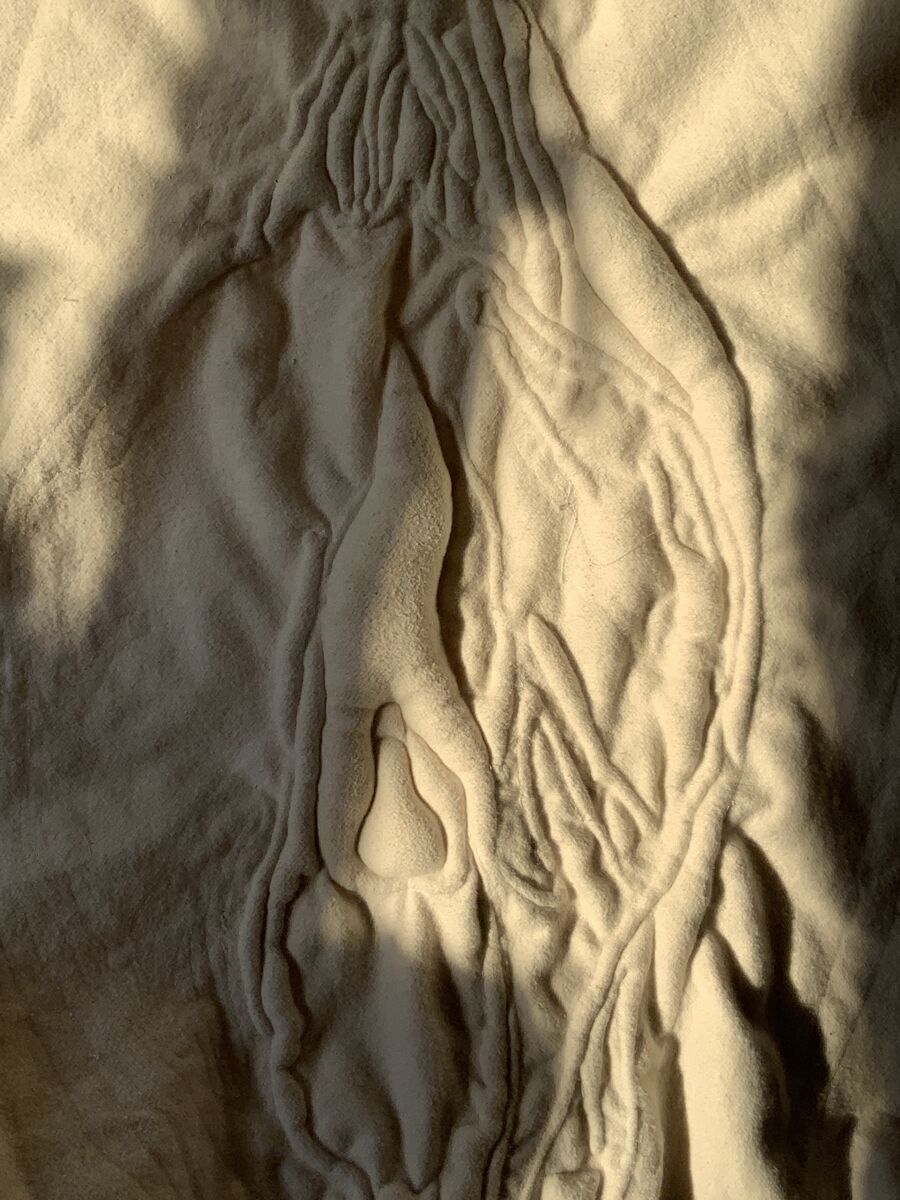
The Three Graces - Don't Touch My Nunns
This textile triptych draws on The Three Graces sculptures by Antonio Canova and their roots in Greek mythology. The Charites—Aglaea, Euphrosyne, and Thalia—have historically functioned as archetypes of idealised femininity within Western classical tradition, embodying beauty, grace, virtue, and moral order. These ideals have long operated to regulate women’s bodies, behaviour, and social value, shaping expectations through systems of aesthetic, moral, and patriarchal control.
The work engages critically with these frameworks from a Black feminist perspective, interrogating how Western ideals of beauty, virtue, and morality have historically constrained women’s autonomy while erasing the multiplicity of Black womanhood. Textile—a medium long coded as feminine, domestic, and devalued—becomes here a site of resistance, care, and epistemic reclamation, reclaiming materiality as a language of Black female subjectivity and agency.
Interwoven with this Western classical reference is the artist’s Jamaican and Igbo heritage, foregrounding the authority of major Igbo goddesses whose cosmologies disrupt colonial hierarchies of value, gender, and power. Ala (Ani/Ana/Ale), the supreme Mother Goddess, governs fertility, morality, creativity, and justice. Nne Mmiri (Mmuo Mmiri), a water deity, embodies protection, wealth, and healing, while Idemmili—linked to sacred rivers and purity—and Aju-mmiri, associated with prosperity and well-being, assert femininity as sovereign, generative, and spiritually authoritative. Anyawu, the sun deity and eye of light, reinforces visibility, accountability, and cosmic order. These figures provide a counterpoint to the narrow, colonial definitions of womanhood imposed by Western patriarchy.
Through this synthesis, the work situates itself within Afrofeminist critique, directly challenging the colonial construction of Africa as “other,” culturally deficient, or spiritually impoverished. It asserts that complex systems of belief, aesthetics, and gendered authority existed prior to colonial violence and continue to inform Black women’s epistemologies, moral frameworks, and social imaginaries.
Situated within contemporary global political debates over women’s bodies—often legislated without women’s voices—the triptych demands representation from a Black woman’s perspective. It exposes the hypocrisy of discourses framed as “protection” or “well-being,” revealing how they operate as mechanisms of patriarchal and racial control. Don’t Touch My Nunns ultimately affirms Black women’s bodily sovereignty, challenges structural erasure, and insists on the right to self-determination, visibility, and generative power.